
I’d try various cleaners, but nothing worked as well as I hoped – until I discovered the cleaning power of baking soda.
This simple ingredient that sits in most kitchen cabinets is actually a secret weapon against oil spills and splatters. I’ve found that baking soda cuts through grease in ways that fancy commercial cleaners often can’t match.
Plus, it’s gentle enough to use on different surfaces without causing damage, making it my go-to solution whenever cooking gets messy.
Key Takeaways
- Baking soda effectively breaks down cooking oil and removes greasy residue from various surfaces.
- This pantry staple is safer and often more effective than many commercial cleaning products.
- The alkaline nature of baking soda helps neutralize acidic oils while absorbing excess moisture.
How Baking Soda Cleans Oil
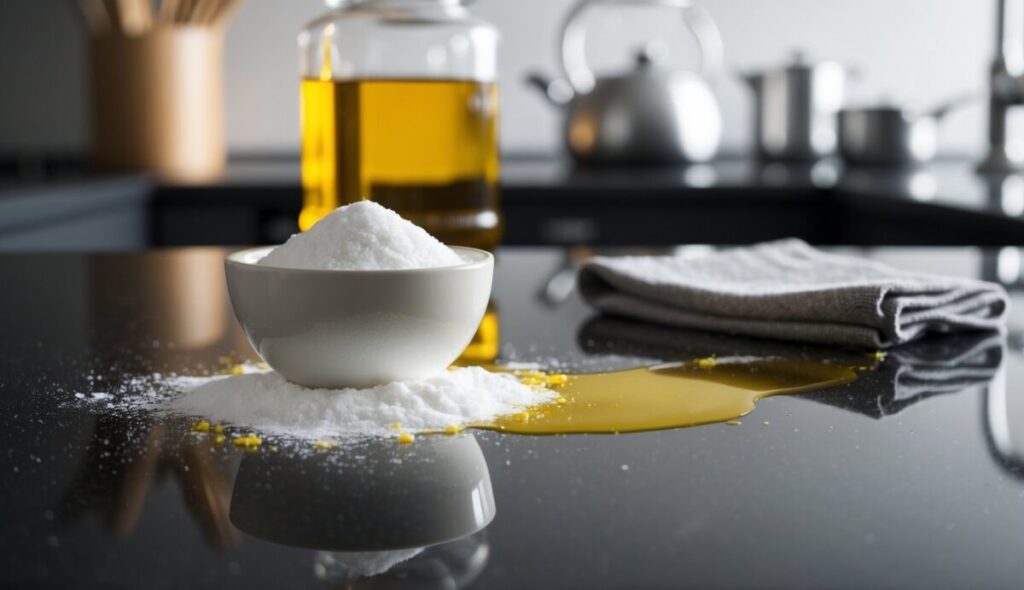
Baking soda is a kitchen superhero when it comes to cleaning oil. I’ve found it works so well because it’s both abrasive and absorbent.
When I sprinkle it on oily messes, it actually soaks up the grease and breaks it down. This makes wiping away oil much easier than using just paper towels.
The best part? It’s completely safe to use! I don’t worry about harsh chemicals since baking soda is non-toxic.
I can use it on my:
- Countertops
- Stovetop
- Kitchen floors
It cleans without scratching surfaces too!
What You’ll Need
To get your frying oil clean, I’ve found you need just a few simple items:
- Baking soda – works like magic to absorb oil
- Paper towels or clean cloth – for wiping and straining
- Warm water – helps with the cleaning process
- Dish soap (if oil is really dirty)
- Soft sponge or brush – for gentle scrubbing
I like to keep these things handy whenever I’m planning to fry foods. It makes the cleanup much easier!
How to Clean Up Cooking Oil Spills Using Baking Soda
Soak Up the Oil
First, I need to get rid of as much oil as possible. I grab some paper towels or an old cloth and gently press down on the spill.
I’m careful not to wipe or rub, as this just spreads the mess around. For big spills, I sometimes put paper towels down first, then sprinkle some baking soda right away to start soaking up the oil faster.
Add a Layer of Baking Soda
After blotting up what I can, I cover the entire oily area with baking soda. I don’t skimp here – I use enough to completely cover the oil with a thick layer.
The baking soda works like magic, absorbing the oil and turning clumpy as it does its job. I let it sit for about 15-20 minutes to really soak everything up.
Work It In
Now comes the scrubbing part. I take a soft sponge or brush and gently work the baking soda into the oily surface.
For really stubborn oil spills, I add a few drops of dish soap to my sponge. This combo helps break down the grease even better than baking soda alone.
Clean It Up
Once I’ve worked the baking soda into the oil, I wipe everything away with a damp cloth. I make sure to rinse my cloth often with warm water to get rid of the oily residue.
Sometimes I need to do this a couple times if it’s a big spill.
Final Rinse
To finish up, I rinse the area with clean water to remove any leftover baking soda or oil. Then I dry everything thoroughly with a clean towel. This prevents any water marks or streaks from forming.
How to Clean Different Surfaces
Kitchen Counters and Cooking Areas
I’ve found that baking soda is amazing for cleaning kitchen surfaces. When I get oil splatters on my counter, I make a simple paste with baking soda and water.
I just spread it on the stain, wait about 15 minutes, and gently scrub it away. This works great for removing sticky residue from around the stove too!
For daily cleaning, I mix:
- 1 cup warm water
- 2 tablespoons dish soap
- 1 tablespoon salt (helps with scrubbing power)
When my oven gets greasy, I make a stronger paste with baking soda and a bit of water, apply it to the spots, and let it sit overnight before wiping clean.
Cleaning Cookware
When my pots and pans get that greasy film, I sprinkle baking soda directly on them while they’re still warm (but not hot). I add a splash of water to make a paste and scrub gently.
For really stuck-on messes, I’ll sometimes add a bit of salt for extra scrubbing power.
I’ve found that a mixture of baking soda, cornstarch, and dish soap works wonders on greasy oven racks too!
Floor Cleaning Tips
Oil spills on floors are tricky! I sprinkle baking soda directly on the spill and let it sit for about 30 minutes.
The powder absorbs the oil, making it easier to sweep up. For kitchen floors with flour or cornstarch spills mixed with grease, I first sweep up the dry ingredients, then tackle the oily residue with baking soda.
For stubborn spots, I use this mixture:
- Warm water
- A squirt of dish soap
- A tablespoon of baking soda
Wood Surface Care
I’m always careful with wooden surfaces. When oil spills on my wooden cutting board, I quickly blot it with a paper towel, then sprinkle on a thin layer of flour or cornstarch to draw out the oil. After a few minutes, I wipe it away.
For oily residue on wood, I use a gentle mix of:
- 1 cup warm water
- 1 teaspoon mild dish soap
- 1 tablespoon white vinegar
I always wipe wood dry immediately to prevent warping!
Ways to Stop Oil Spills Before They Happen
I find that an ounce of prevention saves a ton of cleanup time with kitchen oil. Using splatter screens or lids while frying keeps oil from jumping onto my counters and floors.
When I’m cooking with oil, I always put down a cutting board or tray underneath. This simple trick saves me so much hassle!
I never let oil spills sit around. The longer they stay, the harder they get to clean up.
For my wooden countertops, I apply a good sealer every few months. This keeps the oil from soaking in when spills happen.
Quick prevention list:
- Use splatter guards when frying
- Clean spills right away – don’t wait!
- Put trays under oily cooking projects
- Seal porous surfaces like wood and stone