
I’ve learned that cleaning yellowed doors doesn’t have to be complicated or expensive.
With some basic household items like dish soap, water, vinegar, or even hydrogen peroxide for tougher stains, you can restore your doors to their original brightness.
The key is using the right cleaning method based on how severe the yellowing has become and being consistent with maintenance to keep them looking their best.
Key Takeaways
- White doors yellow from exposure to sunlight, dirt buildup, and household contaminants, but can be restored with proper cleaning techniques.
- Simple cleaning solutions using dish soap, vinegar, or hydrogen peroxide effectively remove yellowing without damaging door surfaces.
- Regular maintenance and protection from direct sunlight can prevent doors from yellowing again in the future.
What You’ll Need
I’ve found that having the right supplies makes cleaning yellowed white doors much easier. Here’s what you’ll need:
- Cleaning agents: Mild dish soap, white vinegar, baking soda, and hydrogen peroxide
- Scrubbing tools: Soft-bristled brush, soft toothbrush (for details)
- Wiping materials: Microfiber cloths or soft sponges
- Other helpful items: Spray bottle, feather duster, bucket for solution
I recommend testing any cleaner on a small, hidden area first to make sure it won’t damage your door’s finish.
How To Clean White Doors
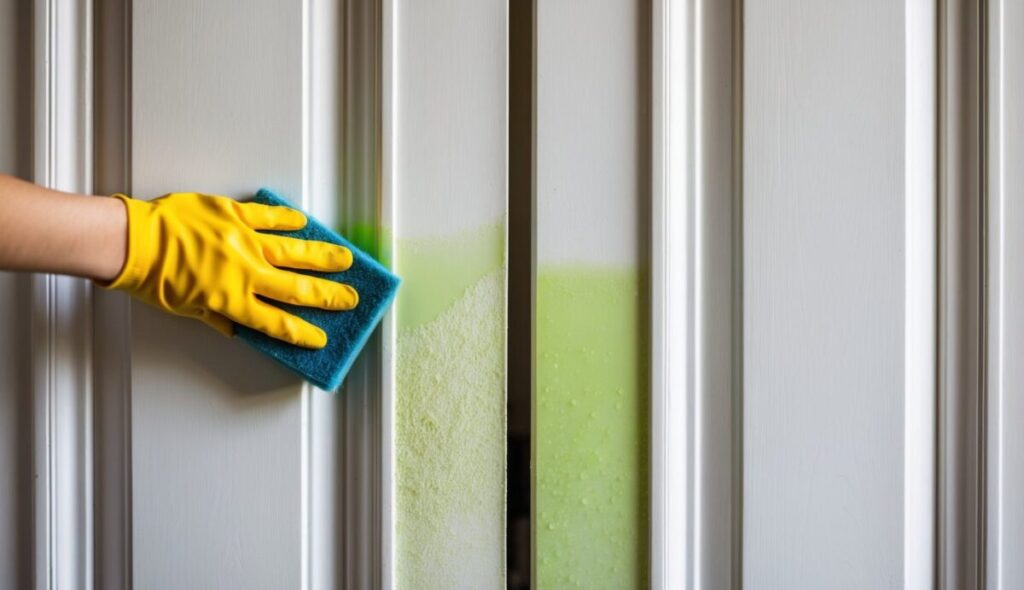
I’ve found several effective ways to clean white doors that have yellowed over time. Let me share my favorite methods that really work!
Dish Soap Solution
This is my go-to method for regular door cleaning:
- Mix 1 tablespoon of mild dish soap in a gallon of warm water
- Test on a hidden spot first to make sure it won’t damage the finish
- Dip a soft cloth or sponge in the solution (not too wet!)
- Wipe the door gently, paying extra attention to areas around handles
- Rinse with a clean damp cloth
- Dry thoroughly with a microfiber cloth
This simple solution works great for everyday dirt and prevents buildup from becoming permanent.
Vinegar Magic
When my doors have stubborn grease or light stains, I reach for vinegar:
- Mix equal parts white vinegar and warm water in a spray bottle
- Spray directly on yellowed areas
- Let it sit for 1-2 minutes
- Wipe with a soft cloth
- Rinse with a clean damp cloth
- Dry completely
White vinegar cuts through grease naturally without harsh chemicals. The smell disappears once it dries!
Baking Soda Scrub
For tougher stains, I make a paste:
- Mix baking soda with just enough water to form a thick paste
- Apply to yellowed spots with a soft sponge
- Gently scrub in circles (don’t press too hard!)
- Rinse well with clean water
- Dry with a soft cloth
The gentle abrasion lifts stains without scratching the paint finish.
Stronger Options
When my doors have really stubborn yellowing, I try this powerful combo:
Hydrogen Peroxide Paste
- Mix hydrogen peroxide with baking soda
- Apply to stained areas
- Let sit for 10-15 minutes
- Wipe clean and rinse thoroughly
- Dry immediately
This works like a natural bleaching treatment for really yellowed spots.
Commercial Cleaner Method
For severe yellowing that won’t budge with natural methods:
- Choose a mild household cleaner (follow the label instructions)
- Dilute properly with water
- Apply with a soft cloth
- Scrub gently on stubborn areas
- Rinse thoroughly to remove all cleaner
- Dry immediately
Caution: I always wear gloves and make sure the room is well-ventilated when using stronger cleaners.
Ways to Keep White Doors Clean
I’ve found that stopping yellowing before it happens is much easier than scrubbing it off later. Here are some simple steps I take to keep my white doors looking fresh:
Daily Habits That Help:
- Wipe doors with a soft cloth weekly using mild soap and water
- Keep doors dry, especially in bathrooms and kitchens
- Use gentle cleaners without harsh chemicals
Smart Prevention Tips:
- Install good ventilation where cooking happens
- Keep cigarettes and vaping away from indoor spaces
- Use doorknobs that don’t collect fingerprints easily
I always make sure to dust my doors regularly with a soft cloth. This keeps dirt from building up over time.
When painting doors, I choose paints that can stand up to sunlight. This helps stop the yellow tint that comes from too much sun exposure.
For areas near heat sources like stoves or heaters, I add extra protection. Putting a small barrier or keeping more distance between the heat and my white doors makes a big difference in keeping them bright.
Common Causes of Yellow Doors
White doors often turn yellow over time. I’ve noticed this happens for several key reasons.
Sunlight Damage is a major culprit. UV rays cause chemical changes in white paint, especially with oil-based and alkyd paints. These paints are particularly prone to yellowing when exposed to sunlight regularly.
Smoking in your home leaves nicotine and tar residue on surfaces. These sticky substances cling to doors and build up over time, creating an unpleasant yellow tint that’s tough to remove.
Your hands contain natural oils that transfer to doors every time you touch them. This creates oil buildup around handles and edges. When mixed with everyday dust and dirt, this combination slowly turns white surfaces yellow.
Moisture and cleaning products can also cause yellowing:
- Bathrooms with poor ventilation
- Ammonia-based cleaners
- Excessive humidity
The type of paint matters too. Oil-based paints and certain varnishes naturally yellow as they age – it’s just part of their chemical makeup. This happens even in perfectly clean homes with no direct sunlight.
Sometimes wood tannins bleed through the paint, creating yellow patches that worsen over time, especially if the door wasn’t properly primed before painting.
When to Paint Again
Sometimes cleaning just won’t cut it when your white doors turn yellow. I’ve found that extensive yellowing often needs a fresh coat of paint to look good again.
If you’ve tried cleaning solutions like vinegar or baking soda paste and still see yellowing, it’s probably time to break out the paintbrushes. Before you start, I recommend:
- Lightly sanding the door surface
- Applying a quality primer (like Zinsser B-I-N)
- Using water-based acrylic white paint instead of oil-based
I prefer water-based paints for white doors because they’re much less likely to yellow over time. Two coats usually gives the best results. When shopping for white paint, look specifically for products labeled “non-yellowing” for the longest-lasting bright white finish.