
If you need to get paint off concrete, there are several methods you can try. First, you can use a pressure washer to blast away the paint.
To do this, start by selecting a high-pressure nozzle for your pressure washer. Then, hold the nozzle a few inches away from the painted surface and spray in a sweeping motion.
Another method you can try is using a wire brush or scraper to manually remove the paint. For this method, simply scrape or scrub the paint until it starts to come off.
If the paint is particularly stubborn, you can also try using a chemical paint stripper. To do this, apply the paint stripper to the painted surface and let it sit for the recommended amount of time. Then, use a scraper or wire brush to remove the paint.
Ways to Remove Paint from Concrete

Dealing with paint on concrete can be a headache, but I’ve found several effective methods to tackle this common problem.
Whether you’re facing a few small spots or a larger painted area, there’s a solution that will work for your needs.
Paint removal methods vary in complexity, cost, and safety considerations.
For small spots, simple manual methods might be enough, while larger areas may require more powerful tools or chemicals.
Using a Scraper or Brush
When I need to remove paint from concrete, I’ve found that scrapers and brushes are my go-to tools. A 5-in-1 scraper tool works great on smooth concrete surfaces. I just push the edge firmly against the paint and apply pressure to lift it off.
For tougher jobs, I attach a wire cup brush to my drill. This combo makes quick work of stubborn paint, especially on textured concrete. The wire bristles get into all those little nooks and crannies that scrapers can’t reach.
Sometimes I’ll use a stiff-bristled brush with some soapy water (Dawn works fine) to scrub away lighter paint stains. For really tough spots, I work in small sections and apply plenty of elbow grease!
Here’s what works best for different paint situations:
| Paint Condition | Best Tool | Tips |
|---|---|---|
| Fresh drips | Scraper | Act quickly before it dries |
| Thin layers | Wire brush | Use gentle pressure |
| Thick, old paint | Wire cup brush on drill | Wear safety glasses! |
| Large areas | Combination of tools | Start with scraper, finish with brush |
Remember to wear gloves and eye protection when using these tools. The paint chips and dust can be messy, so I usually wear old clothes too.
Using a Pressure Washer
I’ve found that a pressure washer can be super helpful when removing paint from concrete. It’s actually one of my go-to methods because it’s faster than scrubbing by hand.
For small paint stains or thin layers of paint, a pressure washer alone might do the trick. I always start with a test spot in a less visible area to see how the concrete responds.
When using a pressure washer for paint removal, I follow these steps:
- Work in small sections (about 2-3 feet at a time)
- Keep the nozzle moving in a sweeping motion
- Spray downward to direct paint chips away from clean areas
- Maintain a consistent distance from the surface
For stubborn paint, I first apply a paint remover to soften the paint, wait the recommended time, and then use the pressure washer. This combo works much better than pressure washing alone on tough spots.
A word of caution – using too much pressure can damage concrete. I start with a lower pressure setting and only increase it if needed. The goal is to remove the paint without etching or damaging the concrete surface.
If the paint still won’t budge after pressure washing, I might need to try other methods like grinding or chemical strippers. But pressure washing is definitely worth trying first!
Using an Orbital Sander
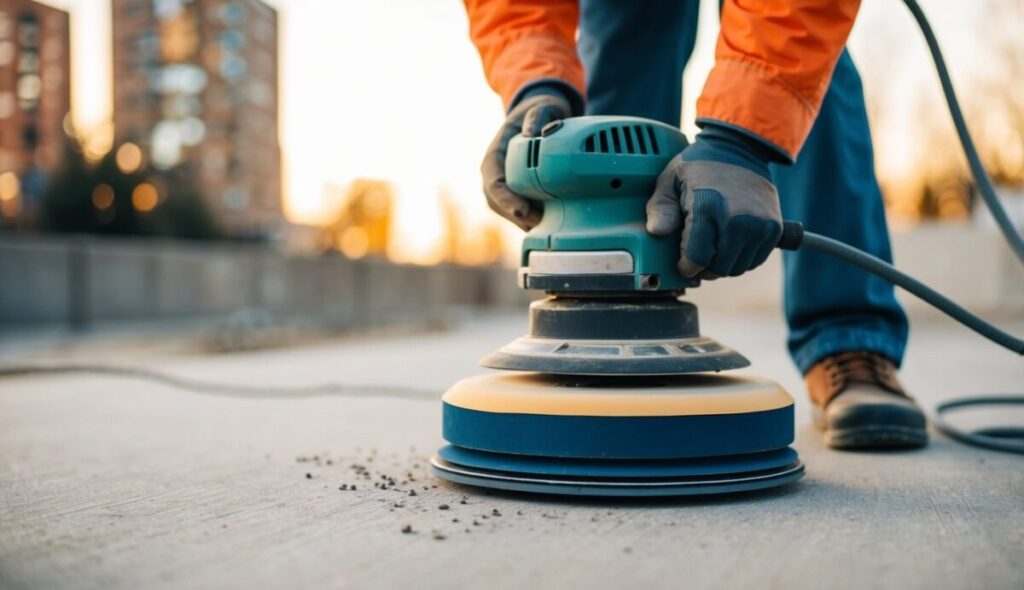
When I need to remove paint from concrete, an orbital sander can be a great option. It works in two ways – the spinning motion strips the paint while also smoothing the surface. I like this method because it doesn’t involve harsh chemicals.
Before starting with the sander, I always scrape off as much loose paint as possible by hand. This makes the sanding work go much faster. I use a medium-grit sandpaper first, then switch to a finer grit to smooth things out.
The best part about using an orbital sander is the dust collection system. Many models can connect to a vacuum, which keeps the mess down. This is much cleaner than chemical stripping methods, and safer for me too!
For tough paint jobs, I sometimes need to:
- Start with a coarser grit
- Make several passes over the area
- Apply steady, even pressure
- Work in small sections
After sanding, I wipe the surface clean and prime it if I plan to repaint. The sander won’t remove 100% of the paint in deep pores, but it will make the surface smooth enough for new paint to stick well.
Paint stripper
Paint stripper can effectively remove paint from concrete, but it’s best for smaller spots rather than large areas. Consider whether your paint is water-based or oil-based, as you’ll need to choose the appropriate stripper type. Just make sure to carefully follow the product instructions for best results.
Soda Blasting
I’ve found that soda blasting is a good way to get paint off concrete. It uses baking soda as the blasting material, which is much gentler than sand or other abrasives.
The process is pretty straightforward. A special blasting machine shoots baking soda at high speed toward the painted concrete surface. The baking soda particles hit the paint and break it apart without damaging the concrete underneath.
What I like about soda blasting is that it’s less messy than sandblasting. The baking soda doesn’t create as much dust, and it’s not as harmful to breathe in. Plus, it won’t texture your concrete like sand can.
You can either rent a soda blaster or hire professionals to do the job. If you’re working on a small area, you might be able to use a pressure washer attachment designed for soda blasting.
After blasting, you’ll need to clean up the residue. Baking soda is water-soluble, so it’s easier to wash away than other blasting materials. A good rinse with water should do the trick.
Safety
Safety should always be your priority regardless of which method you choose.
Protective eyewear, gloves, and respiratory protection are essential when working with chemicals, sanders, blasters, or even pressure washers.
Each method has its trade-offs between cost, environmental impact, and effectiveness.